Table of Contents
- Barriers for Women Veterans Seeking Support
- Why Traditional Veteran Networks Often Leave Women Out
- Gender-Based Barriers in VA Healthcare
- The Mental Health Resource Gap and the Invisible Caregiving Load
- When 'Veteran' Doesn't Feel Like It Fits
- Finding Support Beyond Traditional Systems
- Taking the First Step Toward Real Support
Barriers for Women Veterans Seeking Support
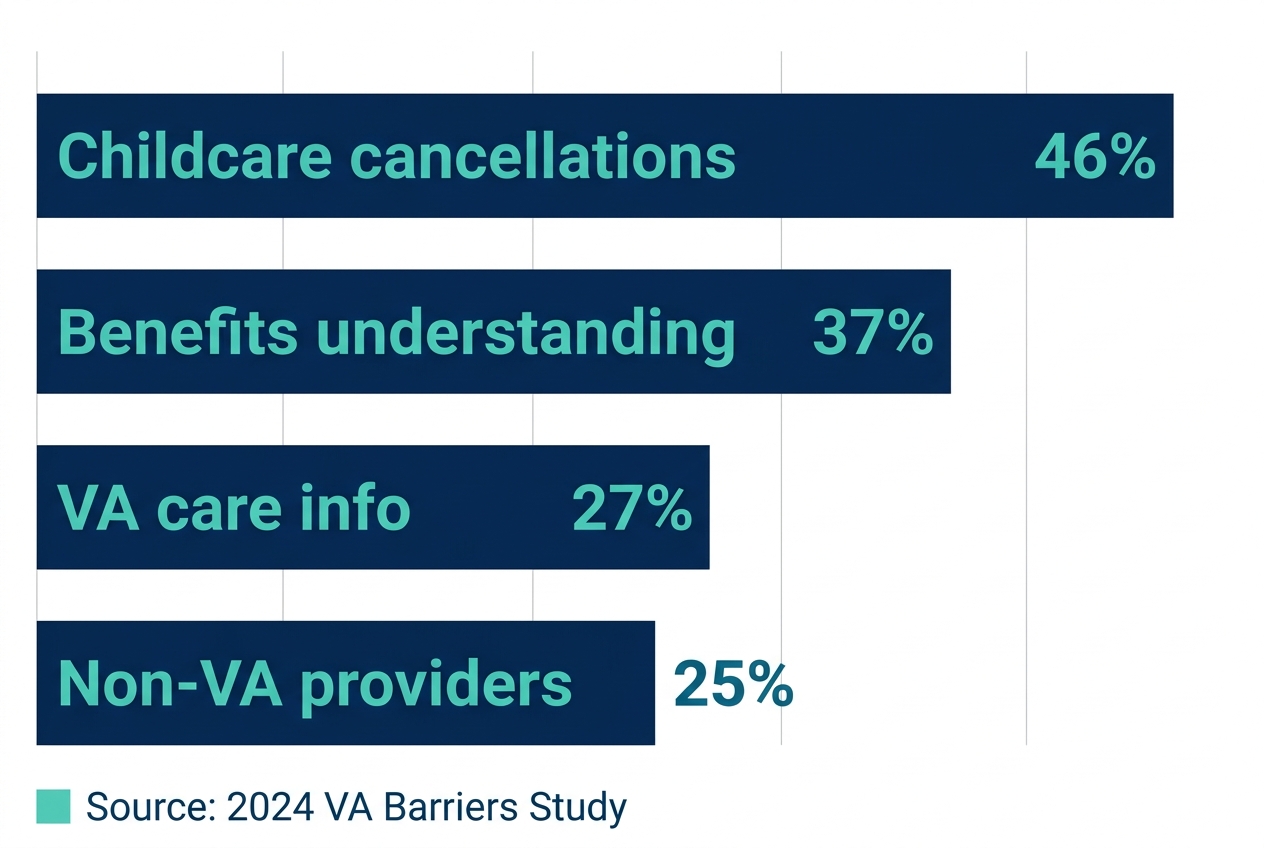
Women veterans are the fastest-growing demographic within the VA system, yet they still face real obstacles when reaching out for support. The barriers for women veterans seeking support are more practical than many realize: a 2024 VA study found that 37% struggled to understand their benefits, while 46% canceled appointments within a year due to childcare conflicts. Roughly one in four switched to non-VA providers because of restricted operating hours. The VA has responded with expanded telehealth, childcare funding, and training for over 11,500 providers, yet obstacles persist.
There are women-specific pathways like Women Veterans Program Managers and the Women Veterans Call Center, but getting there can be intimidating.
Key Takeaways
- barriers for women veterans seeking support begin well before office doors open.
- However, even within the VA system, women veterans encounter structural barriers that push them toward non-traditional care paths.
- These barriers are rarely loud or visible.
- The term veteran can feel like a tight uniform that you could never really button into.
- Many of those who need help are also the hardest to reach via the traditional systems.
Why Traditional Veterinarian Networks Often Leave Women Out
barriers for women veterans seeking support begin well before office doors open. Traditional veteran networks - the peer groups, service organizations, and VA-facing channels that make up veteran identity - are frequently invisible to women simply because they’re not who we expected to be. Women veterans aren’t always classified as veterans at all, and when they are, their service is written off as auxiliary or non-traditional. This invisibility doesn’t just feel frustrating; it pushes women out of the spaces made to help them.
The problem goes beyond recognizing the issue. The practical realities meet with inflexible systems: 46% of women veterans canceled a medical appointment within the past year because of childcare difficulties, and one in four switched to non-VA providers due to limited facility operating hours. It’s not about a tiny inconvenience. These are structural barriers that prevent women from doing what they need to do for their family as well as themselves because they earned it. Some women fear losing child custody if they seek help, while others avoid services altogether after feeling dismissed by providers. As a result, there is a cycle of disengagement that leaves women veterans navigating benefits and care without clear guidance.
The scale of the issue is documented, not anecdotal. A 2024 VA study surveyed over 7,000 women veterans and found that 37% lacked understanding of their available health benefits, and 27% didn’t know how to access VA care. These gaps aren’t about personal failure; they’re failures of the systems designed to include everyone who served. Until these networks recognize women as veterans first and foremost, those barriers will persist — and the consequences will continue to show up in appointment cancellations, provider switches, and unmet needs.
Gender-Based Barriers in VA Healthcare
However, even within the VA system, women veterans encounter structural barriers that push them toward non-traditional care paths. A 2024 study of over 7,000 women veterans found that childcare conflicts, limited office hours, and confusing information on benefits present real obstacles to getting proper care.
The study highlights several quantifiable hurdles:
- 46% canceled a medical appointment within the past year because of childcare difficulties
- 37% lacked understanding of available health benefits, and 27% didn’t know how to use VA care
- One in four switched to non-VA providers, largely due to restricted operating hours at VA medical centers
Logistical challenges add to the pressure. Although provider knowledge satisfaction rose from 79% in 2014 to 86% in 2024, the study shows that many women still have trouble understanding their benefits and accessing services without help. The VA is tackling this issue with several changes, including expanding telehealth, funding childcare through the Deborah Sampson Act, and training over 11,500 providers through the Women’s Health Mini-Residency Program.
Supports also exist. Women Veterans Program Managers help coordinate local care, while the Women Veterans Call Center assists with enrollment and benefits navigation. Free, confidential care for military sexual trauma is available regardless of disability rating, but many women are unaware of this policy.
However, there is another larger gap exposed in this research: the mental health and caregiving needs of many people who fall through the cracks of existing systems.
The Mental Health Resource Gap and the Invisible Caregiving Load
These barriers are rarely loud or visible. They exist in the quiet spaces between appointments, in the unspoken weight of family obligations, and in the mismatch between services designed for a different kind of veteran. Women veterans now represent the fastest-growing demographic in the U.S. military community, yet their needs often remain invisible in a system built around the experiences of men.
This double whammy of caretaking, parenting and taking care of parents along with running their homes, while carrying service-related trauma, means that many women veterans delay getting help or don’t go at all as the VA doesn’t reflect what actually goes on in their lives. Even when assistance is out there, it’s underutilized: VA gives free mental health care for military sexual trauma (MST) whenever women need it, independent of eligibility, but there are still too few people who know that it’s there. VA’s Whole Health model, which incorporates therapies such as yoga, meditation, and others, points toward a different kind of care that might fit where women actually are.
For veterans living in Colombia, this distance compounds the problem even further. The lack of familiarity with systems and additional cultural barriers make it more difficult. But there are still ways to help: The Veterans Crisis Line is available 24/7, anywhere in the world, and no VA enrollment is required to use. Whether in Colombia or any other country, veterans can dial 988 then press 1, send a text to 838255, or call TTY at 1-800-799-4889. These are out there, but women veterans need to know that they exist, and have time to take advantage of them when caring for a spouse or children.
When her system and life roles don't align with who she is as a person, the term "veteran" might feel like it just doesn't fit for her. The next section goes inside to look at those questions of identity, asking how women veterans make sense of their service in relation to their other roles.
When 'Veteran' Doesn't Feel Like It Fits
The term veteran can feel like a tight uniform that you could never really button into. Women whose service didn't follow the traditional route, whether that was through non-combat roles, shorter tours of duty or just being forgotten about, might struggle with a label that feels wrong or even invisible. The challenges female veterans face in asking for help often aren't visible at all: a slight reluctance to claim an identity they don't really understand, paired with the fear that if they ask for help they'll end up losing something. barriers for women veterans seeking support
Numbers tell only a piece of the story. Homelessness among women veterans increased 7% from 2018 to 2022 - from 3,219 to 3,440 - even while overall veteran homelessness fell 12% during that time. These numbers represent real people who served our country and can’t seem to get systems set up to recognize them as such. Many encounter providers who do not see their military service, nor understand what they need, and some live with a greater fear: that seeking housing assistance might cause them to lose custody of their kids. The irony is that service we should commend becomes a safety hazard.
What has changed is this: the VA now recognizes women as the fastest-growing veteran demographic and is building women veterans health care around their lives: primary care, maternity support, mental health for military sexual trauma, and Whole Health options including yoga and meditation. They've added home visits for those hesitant to enter a clinic, and call centers staffed by people who know the weight of the word veteran. The message: if you wore the uniform, the word belongs to you. And slowly, the systems are learning to say so too.
You don't have to be a certain type of veteran to belong. Your service matters. The support is there. We just need to learn how to see you.
Finding Support Beyond Traditional Systems
Many of those who need help are also the hardest to reach via the traditional systems. Nearly half of the veterans who died by suicide in 2022 didn’t have any VA service within the last year - which is why non-traditional entry points matter. The great news is that help can be available anywhere you are, and it doesn't have to fit you into a mold or join the VA. It's here for you now.
Crisis support is always one call or text away.
- Dial 988, then press 1 to reach the Veterans Crisis Line from anywhere in the world
- Text 838255 for confidential support
- Use the online chat at VeteransCrisisLine.net/Chat
- Call the legacy number 1-800-273-8255, then press 1
- For hearing loss, use TTY at 1-800-799-4889
These responders are specialized for veterans and many times include veterans too. You don't need to enroll in VA and the service is free and confidential 24/7.
You can get VA mental health care without worry. Seeking help won’t negatively impact your security clearance or professional credentials. In reality, engaging with VA mental health care and peer initiatives such as Mission Daybreak is associated with lower suicide rates among veterans. The first three outpatient mental health visits per year are copay-free until 2027, which removes a big barrier to starting care.
This peer support and community connection adds another protective factor. Programs like BeThere provide up to 365 days of transition assistance to separating veterans, and social connection helps fight the loneliness that comes when you live in a foreign country. The stay at Cocorná is not a medical facility but it gives veterans the opportunity to share daily routines and activities with their peers for recovery and to be around other veterans.
Barriers to seeking support can feel higher for some groups, including challenges women veterans can face when moving abroad. The pathways above exist for all veterans, regardless of background or enrollment status. The next step is yours: reach out today.
Frequently Asked Questions
Why do many women veterans feel excluded from traditional veteran support networks?
Many women veterans feel excluded because traditional networks are built around male veterans’ experiences and roles. Women often serve in non-combat or non-traditional roles, which are overlooked or dismissed, making them feel invisible in spaces meant to support veterans.
What are the primary gender-based barriers women face when accessing VA healthcare?
Women veterans face childcare conflicts, limited facility hours, and confusing information about benefits. A 2024 VA study found 46% canceled appointments due to childcare and 37% lacked understanding of their benefits.
How does the lack of female-specific mental health resources impact women veterans?
The lack of awareness about available resources prevents many women veterans from seeking help. Free, confidential care for military sexual trauma exists regardless of eligibility, but many women do not know it is available or how to access it.
Why might women veterans struggle to identify with the term 'veteran' when seeking services?
Women veterans often struggle because their service roles do not match traditional expectations of a veteran. Non-combat roles, shorter tours, or being overlooked can make the term feel unfamiliar or misaligned with their identity.
What role does the 'invisible load' of caregiving play in preventing women veterans from accessing support?
The 'invisible load' of caregiving—managing family obligations while dealing with service-related trauma—leads many women veterans to delay or avoid seeking help. The VA system often does not reflect the realities of their daily lives, making support feel inaccessible.
Taking the First Step Toward Real Support
You don’t have to go it alone. The Veterans Crisis Line is here for you 24/7, call or text 988 and press 1, chat online, or contact us anytime, no enrollment needed. No matter if you’re in Colombia or any other place, the VA Foreign Medical Program will cover medically necessary care for service-connected disabilities so your location doesn't need to keep you from getting the help you need.
It’s actually less difficult for women veterans to receive help than many believe. With dedicated channels like the Women Veterans Call Center (855-829-6636), you can get support on the phone, text, or even live chat that will connect you to the benefits, providers and community you need. barriers for women veterans seeking support
Not a medical facility; medical questions should be directed to a healthcare professional or the VA Foreign Medical Program (FMP). Individual results and outcomes may vary based on personal circumstances. Please consult a VA-accredited representative for benefits questions and an immigration attorney for visa/legal advice. Financial and benefits information is provided for guidance only and is not a substitute for professional advice.
Find Support Beyond Traditional Systems
You've seen how those barriers often run deeper than benefit paperwork, from feeling invisible in veteran networks to childcare and scheduling conflicts that push care out of reach. You've also seen that support exists beyond those systems, whether that's the Veterans Crisis Line, telehealth, or community that understands what it means not to fit the traditional mold. If you wore the uniform, that word belongs to you — and connection is one of the strongest antidotes to the isolation many veterans feel. For some, that connection looks like a supportive living environment built by a veteran, for veterans, alongside professional care channels like the VA. ColombiaLiving.vet offers exactly that kind of veteran-founded community in the mountains of Cocorná, Antioquia, Colombia, about two hours from Medellín — and it's explicitly a residence, not a medical facility. You can even start with a trial week before committing to a longer stay. Founder Robert Bibb, a disabled U.S. Army veteran, personally manages every inquiry, so reaching out is simply a conversation. If you're considering life abroad, call or message him on WhatsApp at +57 311 641 5838 to see whether this community fits you.
Find Support Beyond Traditional Systems
Resources
Related services
Veteran Expat Life Overseas
Read more → GuideLiving Abroad on VA Disability Benefits
Read more → GuideRetiring in Colombia with a Pensioner or Retirement Visa
Read more → GuideVeteran Wellness Retreat Program in Colombia
Read more → GuideVeteran Finca Retreat in Cocorna Antioquia
Read more → GuideVeteran Living and Coliving in Medellin
Read more →Your landing pad in Colombia
All-inclusive veteran residence in Cocorná — private room, three meals a day, community, 2 hours from Medellín.
Rooms & Rates Apply