Table of Contents
- Veteran Suicide Prevention Resources and Support for Veterans Living Abroad
- Contacting the Veterans Crisis Line from Outside the United States
- Warning Signs of a Mental Health Crisis to Watch For
- How the VA Foreign Medical Program Works for Veterans Overseas
- Mental Health Support Options for U.S. Veterans Living in Colombia
- How Peer Support Communities Reduce Isolation for Veterans Abroad
- Reaching Out Early: Support Is Always Within Reach
Veteran Suicide Prevention Resources and Support for Veterans Living Abroad
Veteran suicide prevention resources and support remain available to all U.S. Veterans, wherever they call home. The Veterans Crisis Line offers free, confidential 24/7 support via phone, text, or online chat, and there's no need for VA enrollment to receive this service. If you're a veteran living in Colombia or any other country overseas, simply dial 988 then press 1, text 838255, or visit VeteransCrisisLine.net/Chat to speak with a responder. VA also covers emergency mental healthcare, including up to 90 days of follow-up services, and suicide prevention coordinators are available at every VA medical center. These resources exist to ensure that no veteran feels alone no matter where they're located, and can be accessed no matter where a veteran lives.
Key Takeaways
- Even if you're a Veteran living in Colombia or somewhere else outside the U.S., you can get help with just a call, text, or chat.
- The first step in recognizing veteran suicide prevention resources and support is identifying the warning signs before the crisis hits.
- VA Foreign Medical Program (FMP) is a U.S.
- Access to veteran suicide prevention resources and support doesn’t stop when you cross the border.
- Moving to another country removes the unit cohesion and buddies that the vets had always relied on, making them more isolated than they have been at any other time post-service.
Contacting the Veterans Crisis Line from Outside the United States
Even if you're a Veteran living in Colombia or somewhere else outside the U.S., you can get help with just a call, text, or chat. The Veterans Crisis Line is free, confidential, and available 24/7, and you don't need to enroll with VA to get help.
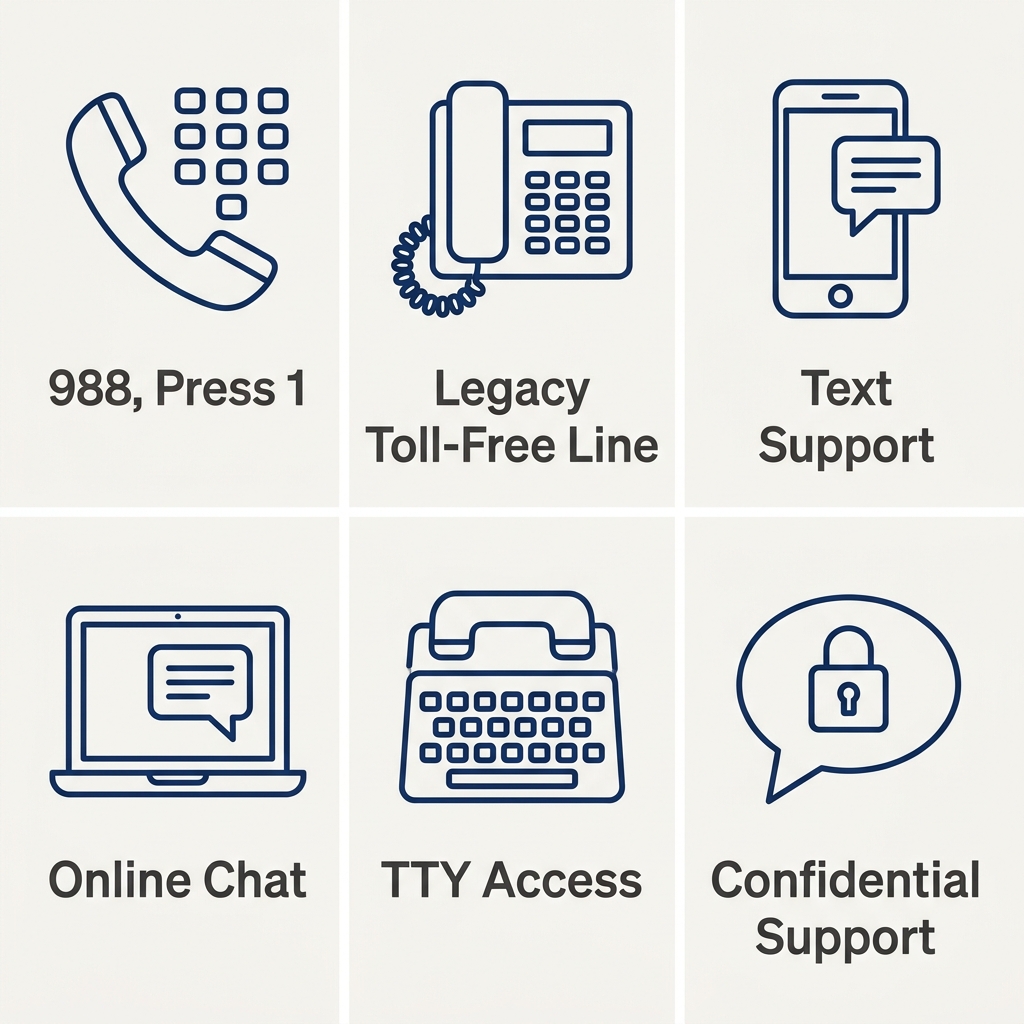
To reach the line from abroad:
- Dial 988 then press 1 (the new three-digit number works internationally)
- Call the legacy toll-free number 1-800-273-8255 (press 1) if dialing 988 is complicated from your location
- Text 838255 for immediate support
- Use the free online chat at VeteransCrisisLine.net/Chat to request a callback at no cost
- For hearing loss, dial 1-800-799-4889 (TTY)
Responders have been trained, and many are veterans, to listen without judgement. You don't have to give us your name, address or anything else that could be used to identify you if you don't want to. Your privacy will be protected, unless there is an immediate danger to your safety.
Following your call, text or chat, responders will check in on your safety and connect you with a local Suicide Prevention Coordinator who follows up the next business day. Since it launched in 2007, the Veterans Crisis Line has answered more than 8 million calls and has been the lifeline of support that connects people to the help they need. You can also reach out if you are concerned about someone else and there’s no crisis necessary.
Whether you're going through a personal crisis or worried about another Veteran, you'll have somewhere to talk on this line without judgment, make plans for your next steps and connect to the resources that are right for you.
Warning Signs of a Mental Health Crisis to Watch For
The first step in recognizing veteran suicide prevention resources and support is identifying the warning signs before the crisis hits. Military training often teaches our service members to put mission over personal problems, so many veterans hide their struggles from even their loved ones. Therefore, it’s difficult for others to catch the warning signs that can be seen.
Some Observable distress signs include feeling anxiety that seems unmanageable, agitation such as pacing or becoming irritable, expressing feelings of hopelessness, engaging in risky behavior such as reckless driving, or an increased consumption of alcohol. These behaviors might show that a veteran is having difficulty managing their emotions and is suffering emotionally.
Sometimes Subtle internal signs can be harder to recognize but just as important. For example, missing appointments, skipping out on social activities, ignoring phone calls or messages, or arranging your affairs in a way that’s almost like packing up. These are warning signs to watch out for, because when they appear it might mean someone is preparing for the worst instead of calling for help. It isn’t usually a single reason that sparks a crisis. Instead, a crisis is a result of years of little stresses that add up to a whole lot, like losing your job, living with chronic pain that doesn’t go away, being buried deeper in debt with money issues, or tossing and turning for so long you can’t sleep and don’t have any energy anymore.
With all of them combining, the chance of an emotional collapse increases dramatically. Hidden psychological scars such as posttraumatic stress disorder or survivor’s guilt add insult to injury. As veterans transition to civilian life, they can feel confused, isolated, or even lose their sense of self, and that can quietly make things worse.
If you spot these signs in a veteran reach out early. Dial 988 and press 1, or text 838255 to contact the Veterans Crisis Line, which is available 24/7. This confidential service connects veterans with responders who understand their experiences, whether they live in the United States or abroad. Acting early increases your odds of getting the support that can help turn things around before they get worse.
How the VA Foreign Medical Program Works for Veterans Overseas
VA Foreign Medical Program (FMP) is a U.S. Department of Veterans Affairs benefit that covers medically necessary care for service-connected disabilities if you live or travel outside the United States. This program ensures that veterans living abroad can obtain treatment for their service-connected condition without needing to return to the U.S.
Here's how it works in practice: First, get your FMP benefits letter by logging into your VA.gov account and going to the Letters section. This one document verifies your eligibility and includes the specific service-connected conditions that you have, so you can show this to any licensed provider overseas. You no longer need to pre-register, or call the VA to gain access to your benefits - the letter is now immediately available for you to access online.
Then select any licensed healthcare provider where you're currently staying. FMP covers office visits, hospital care, urgent care, therapy, physical therapy, skilled nursing, and approved prescriptions for your service-connected conditions. If your provider does not file the claim for you, you can submit it yourself with documentation showing the treatment was medically necessary for your covered condition.
After filing, payments are made based on the banking information provided to the VA. You’ll receive reimbursement for any approved claims, but this can take time. The VA also provides country-specific toll free support lines for veterans abroad, like Australia, Costa Rica and Germany, who need assistance with any questions or issues. However, be aware the VA has suspended some providers in Panama due to fraud, so be sure to check your provider’s status before getting treatment.
Before counting on coverage, verify your eligibility and current program details on VA.gov. It’s one thing to understand how the FMP works, but it’s also crucial to find the right support while living in Colombia.
Mental Health Support Options for U.S. Veterans Living in Colombia
Access to veteran suicide prevention resources and support doesn’t stop when you cross the border. U.S. veterans living in Colombia can still get in touch with VA mental health services through telehealth, same-day care and crisis support all made to be available for where you happen to be located. With the VA’s reach around the world, you can have counseling, peer support and emergency interventions without needing to come back to the U.S.
Seeking mental health care from VA won't harm your security clearance or other professional credentials, a concern that often delays getting the help you need. The BeThere peer support program offers up to 365 days of transition support to veterans separating from service, helping them make it through the transition to civilian life abroad. 24/7 crisis support is also always available via the Veterans Crisis Line, where responders, many of whom are veterans themselves, can connect you with a suicide prevention coordinator at your nearest VA medical center. They create care plans based on your needs to make sure you have the right support, when you need it.
The VA’s community care program lets you access specialty and/or local therapy through providers in Colombia if VA services are not available, or you need culturally attuned care. Your first three outpatient mental health visits each year will be copay free through 2027, thus removing one more financial barrier in order to get started. Veteran Service Organizations (VSOs) offer free benefits navigation to help you find the right path for your needs, whether that is telehealth, community care, or emergency provisions.
Outside of the more formal channels, the VA’s outreach insists that even if you’re halfway around the world, you’re not alone. Their “Don’t wait. Reach out.” campaign is all about the fact that reaching out for help is a sign of strength, not weakness. If you need immediate crisis intervention or long-term counseling, the resources available are intended to meet you wherever you happen to be, at the moment and in your life.
Connecting with other veterans living abroad can help ease feelings of isolation that may occur when living overseas. Peer support communities - whether local groups or online forums - give veterans a place to share their experiences and coping mechanisms. These types of informal networks provide additional support to complement existing formalized support systems to better help veterans combat the struggles of being an expat.
How Peer Support Communities Reduce Isolation for Veterans Abroad
Moving to another country removes the unit cohesion and buddies that the vets had always relied on, making them more isolated than they have been at any other time post-service. In Colombia, meals eaten together, weekly activities, and the small resident community serve as the remedy for loneliness — daily, low-stakes contact that rebuilds belonging without any clinical framing.
The risk is very real: nearly half of the veterans who died by suicide in 2022 had no VA service usage in the prior year, according to VA data. This means that community programs aren't simply "nice to have", they're on the front lines for preventing suicide. And the VA agrees, because suicide rates decrease among those veterans that are actively engaging in VHA mental health care, while the Mission Daybreak peer support initiatives (anonymous peer groups, enhanced check-ins, and talking circles) show that this agency views community intervention as its first line of defense. These programs give our veterans both everyday connection and a lifeline when they need it.
Peer communities apply the S.A.V.E. Framework: any veteran can recognize signs of distress - anxiety, agitation, hopelessness, risky behavior or increased drinking - and step in to respond without professional training. The Veterans Crisis Line isn't just for when someone hits rock bottom: friends encourage each other to call if things are rough, which is completely normal and smart. These programs sit alongside formal veteran suicide prevention resources and support, helping veterans have everyday connections as well as a lifeline when needed.
There, that lifeline is built upon common routines and a watchful eye from neighbors. It evolves into an instinct for reaching out early, before there's even been a crisis, because help is always available.
Frequently Asked Questions
Can I contact the Veterans Crisis Line if I am living outside of the United States?
Yes. The Veterans Crisis Line is available 24/7 worldwide. Dial 988 then press 1, text 838255, or use the free online chat at VeteransCrisisLine.net/Chat. No VA enrollment is required to reach responders trained to support veterans abroad.
What mental health support options are available for U.S. veterans living in Colombia?
U.S. veterans in Colombia can access VA mental health services through telehealth, same-day care, and crisis support. The Veterans Crisis Line offers 24/7 confidential help, and the BeThere peer support program provides up to 365 days of transition support.
How can peer support communities help reduce social isolation among veterans living abroad?
Peer support communities rebuild belonging through shared meals, weekly activities, and small resident groups. These daily low-stakes connections reduce isolation and act as an early warning system before crises develop.
Does the VA Foreign Medical Program (FMP) cover mental health treatment for veterans overseas?
The VA Foreign Medical Program covers medically necessary care for service-connected disabilities received outside the U.S. Veterans must obtain their FMP benefits letter via VA.gov and submit claims with documentation to receive reimbursement.
What are the warning signs of a mental health crisis I should look for in myself or my fellow veterans?
Warning signs include unmanageable anxiety, agitation, hopelessness, risky behavior, increased alcohol use, missing appointments, social withdrawal, ignoring communication, or arranging affairs like goodbye. These may indicate accumulating stressors or hidden psychological scars.
Reaching Out Early: Support Is Always Within Reach
If you are angry and can't seem to get some shut eye, or if life changes in Colombia are weighing heavily on your heart, please don't wait until everything seems unbearable before seeking help. The Veterans Crisis Line is here for all the challenges in life, whether that means dealing with finances, relationships, or the hard work of re-adjusting to life away from home.
You can call 988 then press 1, text 838255, or use the free online chat on VeteransCrisisLine.net/Chat to be connected with a trained responder, confidentially and without needing to be enrolled in VA. These options are available 24/7, and the responder will listen without judgement. The VA Safety Plan app can also help you document coping strategies before things get worse.
No matter where you're at, whether that's Cocorná or anywhere else, there's always veteran suicide prevention resources and support available.
Find Community and Connection Abroad
You've seen that veteran suicide prevention resources and support, from dialing 988 and pressing 1 to texting 838255 or using the free online chat, remain available wherever you live, with no VA enrollment required. You've also learned that connection itself is a powerful form of prevention, since veterans engaged in community are far less likely to withdraw in silence. If you're considering life in Colombia, day-to-day camaraderie with fellow veterans can be part of that support system. ColombiaLiving.vet is a veteran-founded residence in Cocorná, Antioquia, not a medical facility, where shared meals, routines, and brotherhood help counter isolation. It sits about two hours from Medellín, with amenities like a gym, sauna, and communal dining areas. You can visit for a trial week before committing to anything longer. To ask questions or explore a stay, reach founder Robert Bibb directly on WhatsApp at +57 311 641 5838.
Find Community and Connection Abroad
Resources
- Learn About VA Foreign Medical Program Coverage Eligibility
- Download Your Foreign Medical Program Benefits Letter Instantly
- Reach Veterans Crisis Line Before Crisis Situations Escalate
- Understand How the Veterans Crisis Line Supports Veterans
- Get Confidential Veterans Crisis Line Support From Expert Responders
- Discover VA Suicide Prevention Programs and Mission Daybreak Initiatives
- Find Multiple Support Pathways for Veterans Facing Crisis
Related services
Veteran Expat Life Overseas
Read more → GuideLiving Abroad on VA Disability Benefits
Read more → GuideRetiring in Colombia with a Pensioner or Retirement Visa
Read more → GuideVeteran Wellness Retreat Program in Colombia
Read more → GuideVeteran Finca Retreat in Cocorna Antioquia
Read more → GuideVeteran Living and Coliving in Medellin
Read more →Your landing pad in Colombia
All-inclusive veteran residence in Cocorná — private room, three meals a day, community, 2 hours from Medellín.
Rooms & Rates Apply